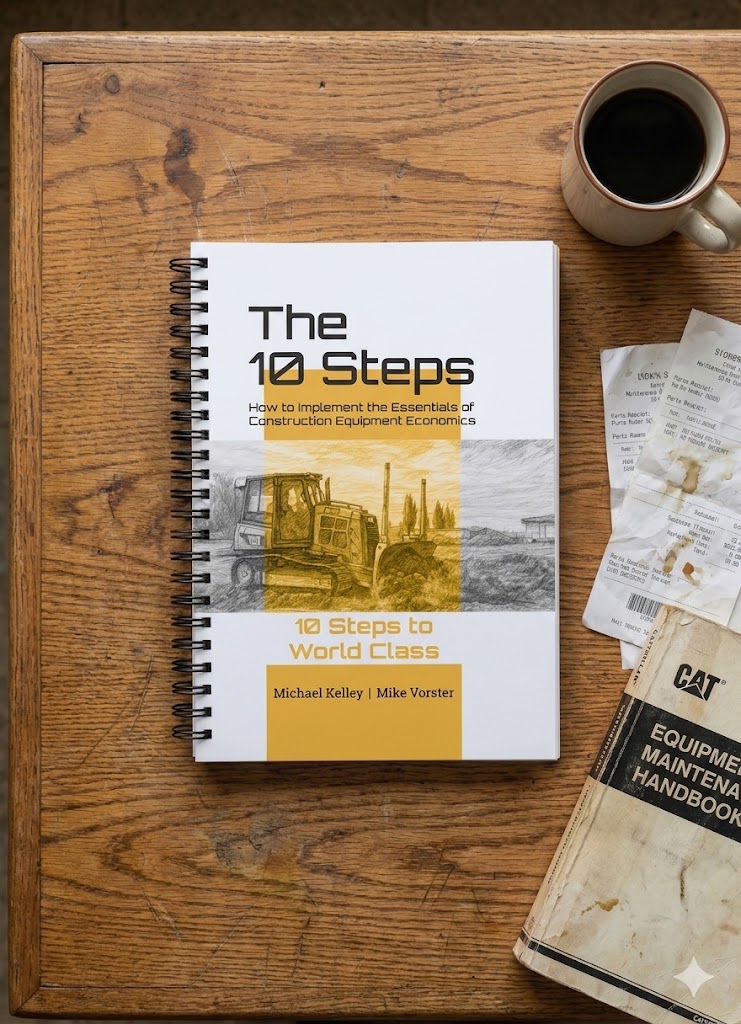
Step 1 - Organize Yourself
Set up a clear organizational structure before touching the fleet. Define roles, responsibilities, authority, and accountability, and ensure all key equipment functions are covered. Without structure, chaos is inevitable.
Step 2 - Organize Your Fleet
Structure your fleet into groups, categories, and rate classes so assets can be managed appropriately. Assign performance standards and create a cost recovery system to track and allocate equipment costs effectively.
Step 3 - Define Your Cost Types
Understand the difference between owning costs, which are fixed and finance-driven, and operating costs, which are variable and usage-driven. Learn how utilization and reliability affect both. This step is the foundation for accurate costing, budgeting, and decision-making.
Step 4 - Collect & Verify Data
You must know where equipment is and what it’s doing. Use technology such as GPS and telematics, then reconcile it with field reports to create a single source of truth for location and status data.
Step 5 - Utilization Above All
Maximize the time machines are actually working. Identify and reduce waste such as standby, downtime, and idle assets. Measure utilization consistently and drive behavior change across operations, estimating, and maintenance.
Step 6 - Reliability Before Availability
Focus on preventing breakdowns, not just fixing them. Measure reliability, or the frequency of failures, using RED events. Improving reliability reduces downtime, cost, and disruption, and ultimately improves availability.
Step 7 - Manage Age
Equipment has an optimal lifecycle — its “sweet spot.” Replace or rebuild machines before costs spike. Use tools like churn charts and follow the principle “buy what you burn” to maintain a healthy fleet and plan CAPEX.
Step 8 - Charge Jobs Fairly
Use rates and charge codes to allocate equipment costs correctly. Avoid oversimplified single rates. Dual-rate systems better reflect fixed versus variable costs and expose inefficiencies like standby time.
Step 9 - Build the Rate
Develop internal equipment rates by estimating owning and operating costs using methods like first principles or historical data. Rates are estimates, so accuracy depends on assumptions and continuous refinement.
Step 10 - Produce Your Budget
Run a continuous loop: estimate, track, analyze, and change behavior. Budgets are not static; they are tools to drive improvement and align operations with financial performance.
Core Takeaway
Be proactive, data-driven, and structured. Success comes from integrating organization, cost understanding, utilization, reliability, and long-term planning into one system.